















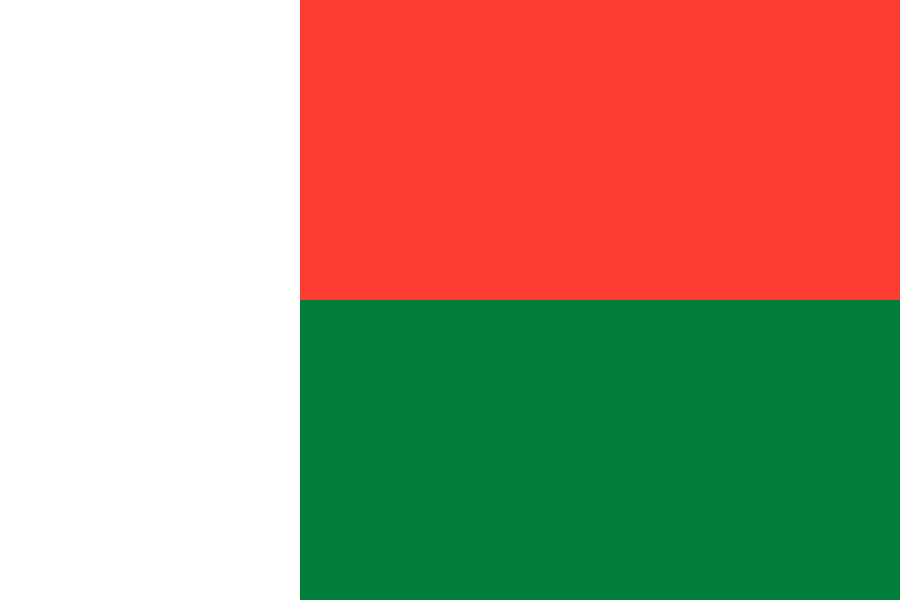

















ANTANANARIVO, Madagascar — Madagascar is strengthening its national healthcare preparedness after authorities validated a new National Strategic Plan for Public Health Surveillance on August 31, 2026.
The strategy is designed to improve the country's ability to detect, monitor and respond to emerging health threats before they develop into larger emergencies.
Public health surveillance involves collecting and analysing information on diseases and other health events so authorities can identify unusual patterns and respond more quickly.
Early detection is becoming increasingly important for Madagascar, where infectious diseases and other health emergencies can place pressure on already stretched healthcare services.
The new strategy is expected to improve coordination between health authorities and other institutions involved in disease monitoring and emergency response.
A stronger surveillance system could allow Madagascar to identify outbreaks earlier and mobilise preventive measures more rapidly.
The country's Ministry of Public Health has also highlighted recent work aimed at strengthening health monitoring and food-safety controls, reflecting a broader focus on national health security.
The initiative could be particularly important for communities outside major urban centres, where rapid access to specialist healthcare and laboratory services can be more challenging.
Madagascar's new surveillance strategy represents an important investment in preparedness, prevention and public-health protection.
Authorities will now face the challenge of translating the national plan into effective monitoring, reporting and rapid-response systems across the country.
Comments (0)
Sign in to join the conversation.