


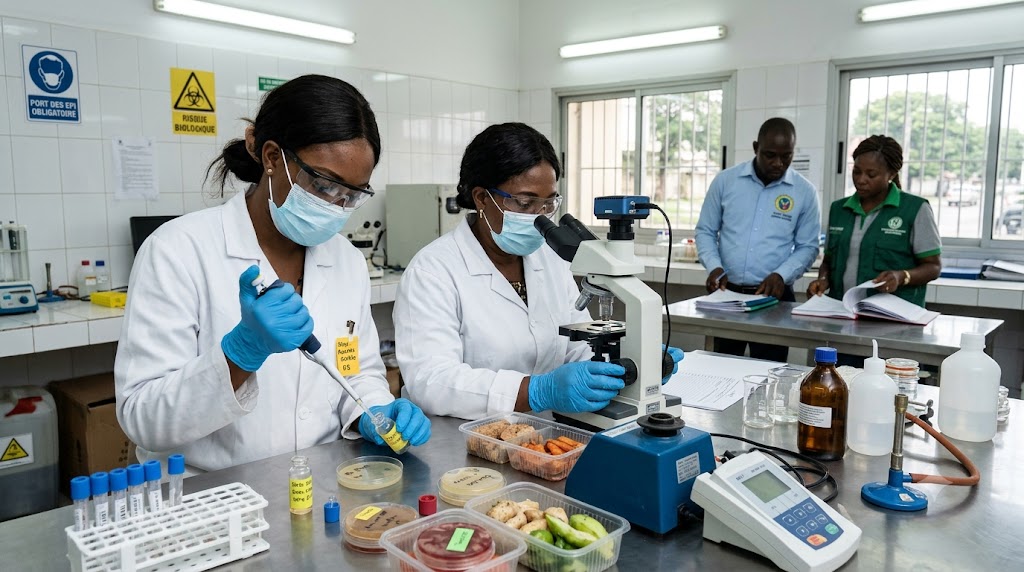
The Republic of the Congo is developing a national roadmap to strengthen food safety, improve laboratory testing and protect consumers from foodborne health risks.
The initiative was launched on October 21 at the World Health Organization (WHO) office in Brazzaville, bringing together health officials, scientists, agricultural authorities and regulatory institutions. The workshop continued through October 23, according to the Ministry of Health and Population.
The effort aims to establish a coordinated national action plan so that food sold and consumed across the country meets appropriate safety and quality standards. It is aligned with the WHO’s Global Strategy for Food Safety 2022–2030.
Participants identified several weaknesses that need attention. These include limited coordination between government departments, gaps in food-control regulations and insufficient resources for some laboratory and inspection services.
The National Public Health Laboratory highlighted its microbiological testing work while noting constraints involving equipment, technology and logistics. Agricultural authorities also raised concerns about animal-health inspections and the availability of slaughter facilities that meet required standards.
The Congolese Agency for Standardisation and Quality stressed the importance of strengthening national coordination around the Codex Alimentarius, the international collection of food standards and guidelines.
The proposed roadmap is expected to define priorities, responsibilities and coordinated actions across the health, agriculture, trade and industry sectors. Planned areas of attention include modernising regulations, improving laboratory capacity, connecting relevant institutions and strengthening inspection systems.
Better coordination could help authorities detect unsafe food more effectively, respond to contamination risks and improve consumer protection. It could also support businesses by making food-safety requirements clearer and more consistent.
However, the roadmap is still being developed. Its public-health impact will depend on the final measures adopted, the resources made available and the effectiveness of implementation nationwide.
For consumers, the key question is whether the plan will lead to stronger inspections, more reliable laboratory testing and better enforcement of food-safety standards.
Comments (0)
Sign in to join the conversation.