


The report identifies several technology challenges that could slow The Gambia's progress towards becoming a competitive digital economy.
One major concern is internet affordability. Mobile data costs approximately 8.68% of average monthly income, rising to nearly one-fifth of income for households among the poorest 40%.
The country also recorded an average fixed broadband upload speed of just 7.71 Mbps, the lowest among the 56 Commonwealth countries assessed.
Other findings include:
- Digital skills: The Gambia scored only 0.5 out of 10 for digital, data, media and AI capabilities.
- Education: Technology education and training provision received a score of 2.2 out of 10.
- AI adoption: 56.6% of surveyed Gambian university students who already use ChatGPT said they used it to assist with their studies at least sometimes.
- AI confidence: 71.8% of surveyed students believed ChatGPT could provide reliable information.
The student survey involved 83 participants aged 18–29 and should not be interpreted as representing all young Gambians.
An interesting economic opportunity also emerged from the research.
Using economic scenarios developed by the International Monetary Fund, researchers estimate that artificial intelligence could increase The Gambia's GDP by approximately US$38 million over ten years under a moderate scenario.
The estimated opportunity could reach US$57 million under an optimistic scenario.
The report recommends improving affordable internet access, expanding practical technology education, supporting digital entrepreneurship and developing AI solutions suited to local languages and needs.
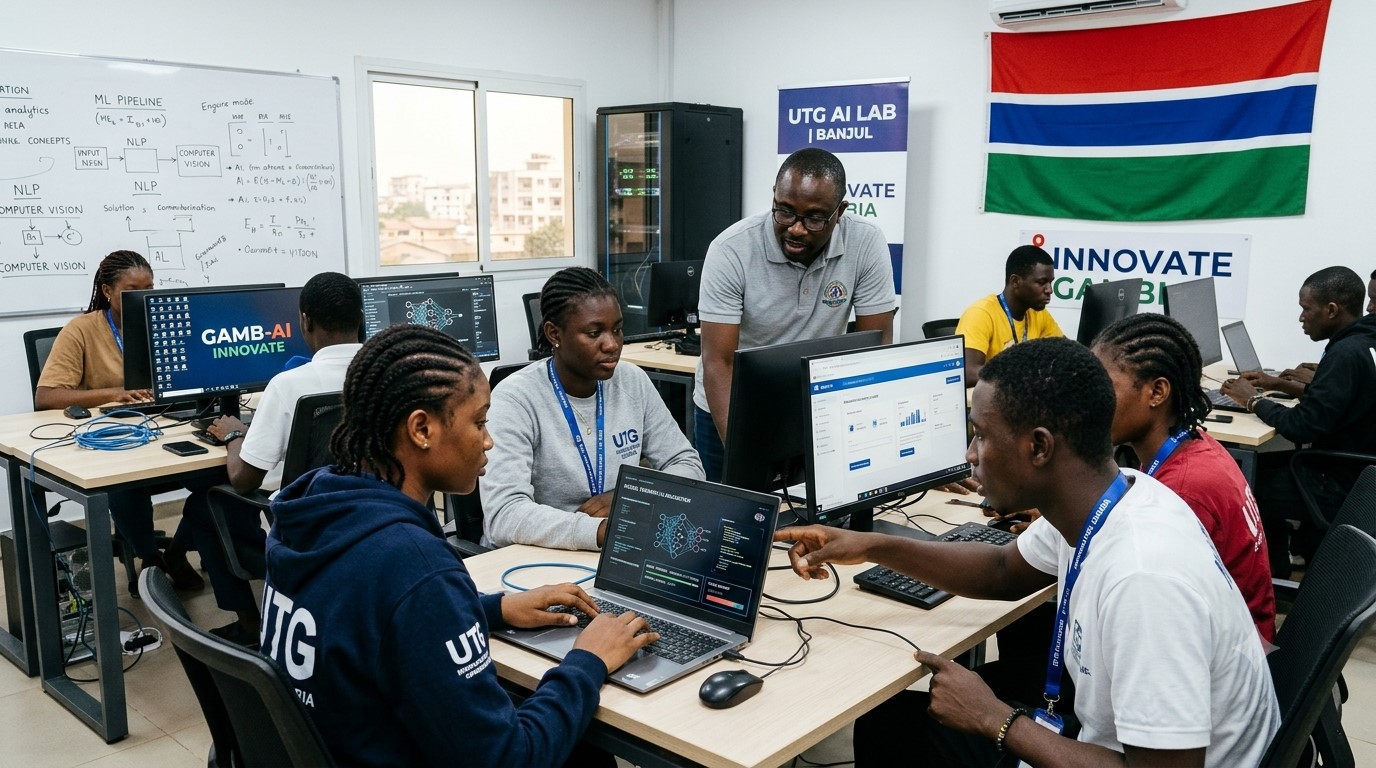
The Gambia already has several digital development initiatives underway, including the CUBE AI Tutor pilot and government-supported technology training programmes.
The challenge now is to turn growing interest in artificial intelligence into practical digital skills, local innovation and employment opportunities.



Comments (0)
Sign in to join the conversation.