


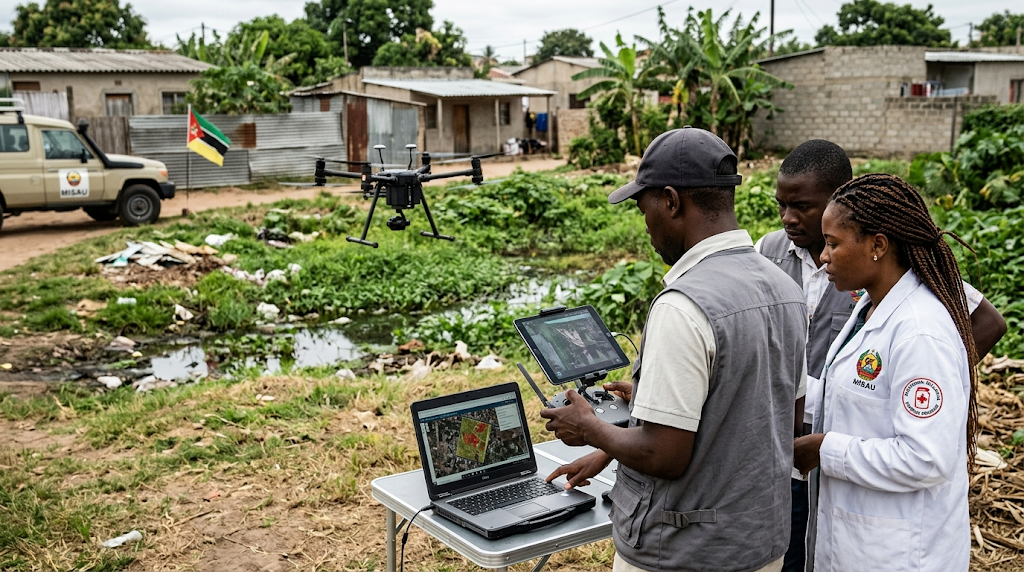
Mozambique is testing innovative technology to strengthen its fight against malaria, as the World Health Organization (WHO) introduces drones, artificial intelligence and digital mapping to identify mosquito breeding sites in Matola.
The pilot initiative, implemented in collaboration with Mozambique’s Ministry of Health and the National Malaria Control Programme, aims to improve the detection and treatment of mosquito breeding areas that are difficult to reach through conventional surveillance.
During the three-month project, drones captured high-resolution aerial images across six areas of Matola. The images were analysed using AI to identify potential mosquito breeding locations, which were subsequently checked by entomology specialists.
Confirmed breeding sites were added to digital maps to help field teams target larvicide applications more efficiently.
The initiative is supported by Unitaid and also involves community participation, with local teams and residents helping improve awareness of malaria prevention.
The approach could make mosquito control more targeted and efficient, particularly in densely populated urban areas where breeding sites can be difficult to locate.
WHO says the project is generating practical evidence that could help guide similar interventions in other Mozambican cities facing malaria challenges.
The results could offer an important opportunity for Mozambique to combine scientific research, digital technology and community action in protecting public health.
Comments (0)
Sign in to join the conversation.