


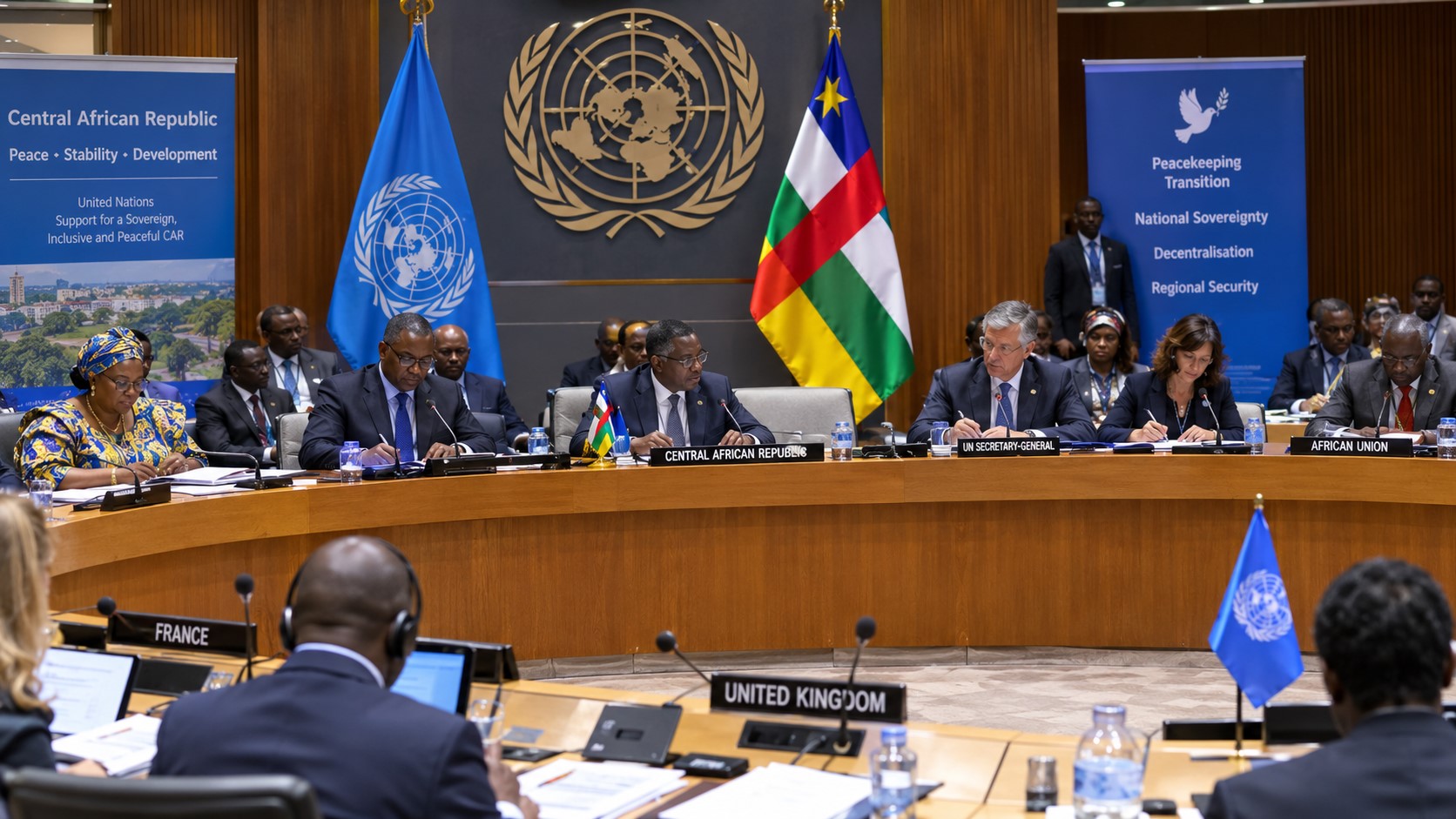
Bangui, October 23, 2026 — The United Nations has warned that a premature reduction in peacekeeping support could threaten political stability in the Central African Republic (CAR), as the government continues efforts to strengthen state institutions and consolidate recent security gains.
During a briefing to the UN Security Council on October 20, Valentine Rugwabiza, the head of the United Nations Multidimensional Integrated Stabilization Mission in the Central African Republic (MINUSCA), highlighted the importance of maintaining sufficient peacekeeping capabilities while national security institutions become stronger.
The warning comes amid continuing instability in border areas affected by armed-group activity and the spillover effects of the conflict in neighbouring Sudan. An attack on Am-Dafock in June killed civilians and members of the country's security forces and displaced more than 17,000 people, according to the UN.
Political decentralisation is also progressing. By October 1, elected local authorities had been installed in 127 of the country's 177 municipalities, marking an important step toward strengthening local governance. However, some local administrations still require financial resources, training and institutional support.
The UN has stressed that any transition away from international peacekeeping responsibilities must be gradual, sustainable and guided by conditions on the ground. Building capable national security forces and strengthening public institutions will be essential to preserving political progress.
The debate carries wider significance for Central Africa, where regional insecurity, cross-border conflicts and governance challenges continue to shape political priorities.
As the Security Council considers MINUSCA's future mandate, the central question is how the country can assume greater responsibility for its security without undermining the progress achieved in recent years.
Comments (0)
Sign in to join the conversation.