


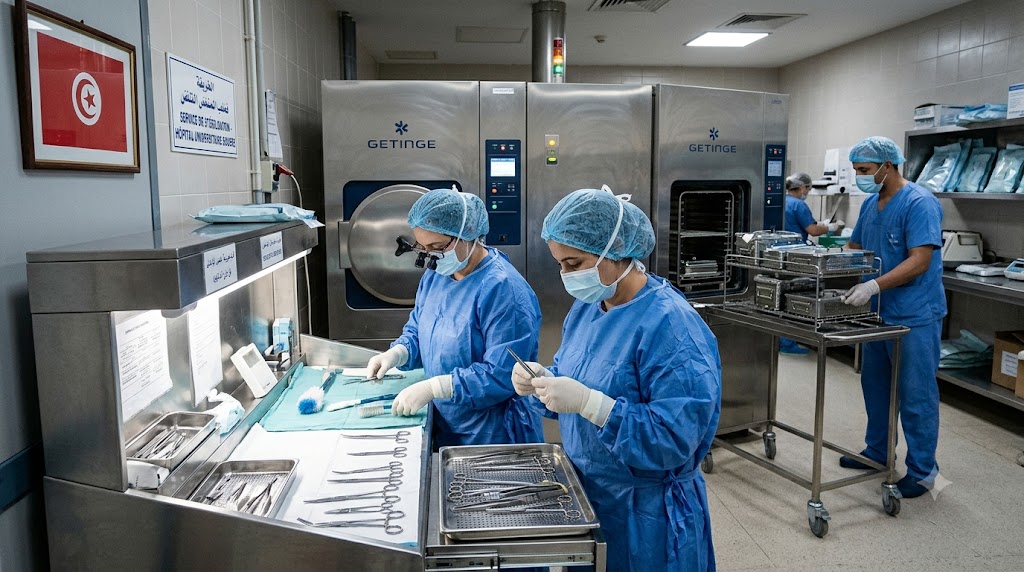
A new healthcare study conducted at Sahloul University Hospital in Sousse, Tunisia, has reported significant improvements in medical equipment sterilisation procedures following a quality-improvement programme involving staff training, standardised practices and regular monitoring.
Published in October 2026, the research examined how hospitals could strengthen infection prevention by improving the way reusable medical devices are cleaned, packaged and sterilised before being used on patients.
The research team collected 770 observations across two study periods between 2024 and 2025 to evaluate changes in medical equipment reprocessing practices.
The findings showed improvements across several important procedures. Compliance with medical device reception standards increased from 92.2% to 100%, while manual cleaning compliance rose from 77.6% to 91.9%.
Performance also improved in drying and packaging, increasing from 88% to 94%, while compliance during autoclave unloading reached 98.5%, compared with 85% before the intervention.
The findings highlight the importance of proper sterilisation procedures in reducing the risk of healthcare-associated infections.
However, the researchers noted that some individual practices still require attention. A survey of 120 operating-room staff members also found that 64.2% were satisfied with sterilisation services, indicating room for further improvement.
The study recommends continued professional training, regular audits, better infrastructure and institutional support to maintain progress.
The findings could offer useful lessons for other Tunisian hospitals seeking to improve patient safety and healthcare quality.
Comments (0)
Sign in to join the conversation.