


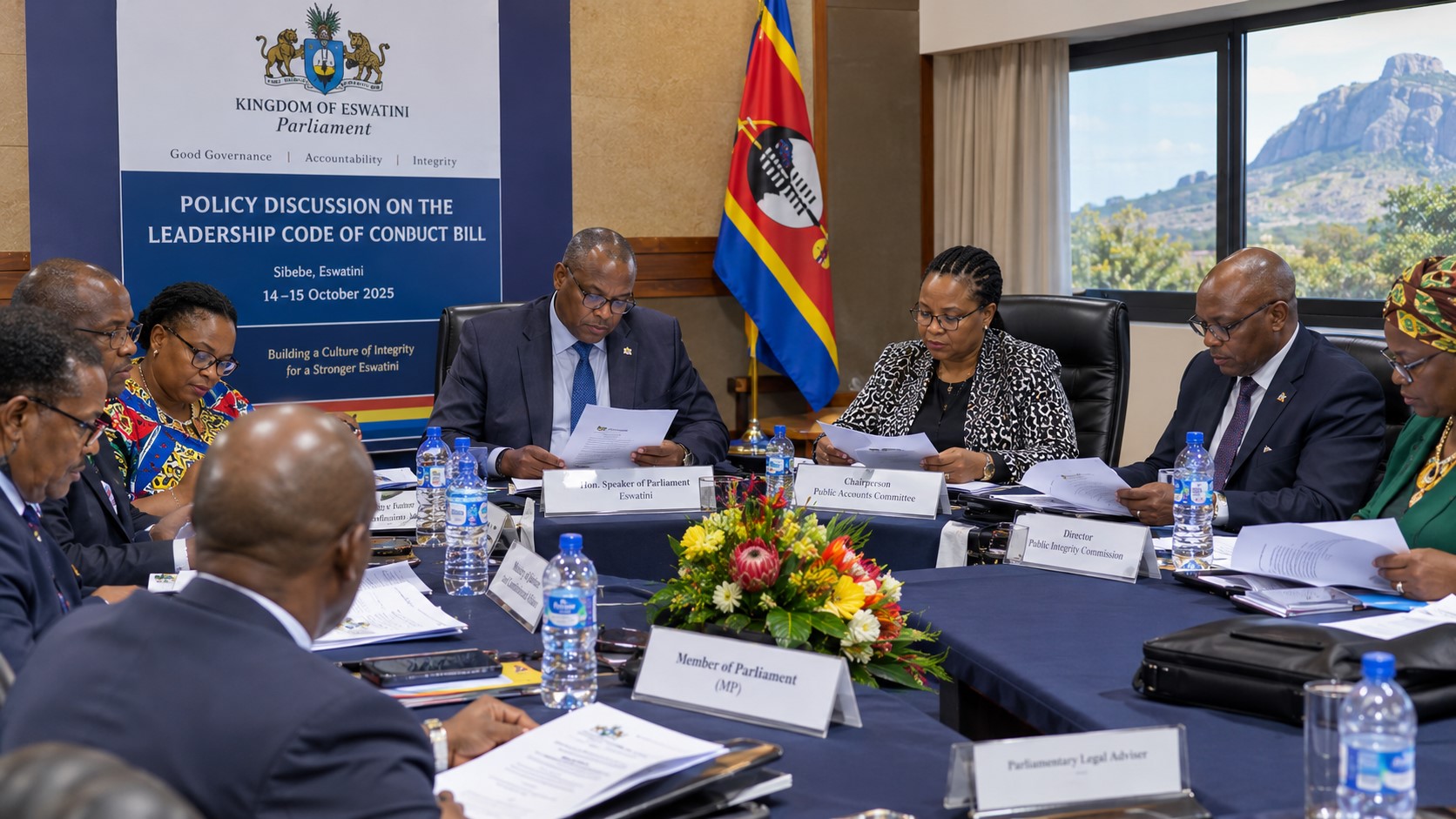
A proposed law aimed at regulating gifts received by public officials has sparked debate among lawmakers in Eswatini, putting government accountability and conflict-of-interest rules under the spotlight.
The discussion took place during a parliamentary retreat at Sibebe Resort in October, where the Eswatini Commission on Human Rights and Public Administration/Integrity presented the Leadership Code of Conduct Bill, 2025.
The proposed legislation seeks to regulate gifts, donations and hospitality received by public officers in their official capacity. It includes provisions concerning gifts valued at E5,000 or more, raising questions about how the rules would apply to politicians, customary exchanges and official engagements.
Several Members of Parliament expressed reservations about the proposal. Some argued that Eswatini’s social and cultural traditions involve frequent exchanges of gifts, including livestock, while others questioned how the rules would distinguish customary giving from benefits that could influence official decisions.
Deputy Speaker Madala Mhlanga also raised questions about whether accommodation, transport support and hospitality provided during official workshops could fall within the definition of gifts.
Parliament clarified that the bill had not yet been passed into law and remained under consideration through the relevant government and parliamentary processes.
The debate highlights the challenge of creating clear standards for public officials while accounting for local customs and legitimate official activities. Supporters of stronger integrity rules argue that transparent regulations can help prevent conflicts of interest and strengthen public confidence in government.
The next stage will be important in determining whether lawmakers and officials can agree on practical safeguards that promote accountability without unnecessarily restricting customary practices.
Comments (0)
Sign in to join the conversation.