


SÃO TOMÉ, São Tomé and Príncipe — October 24, 2026
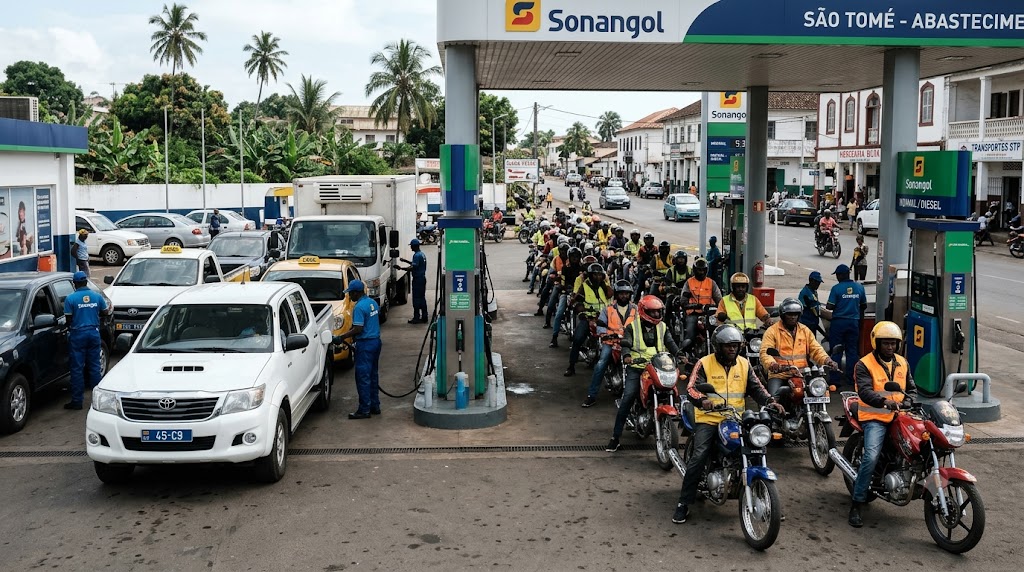
Fuel sales have resumed across São Tomé and Príncipe following a shortage that disrupted transport and commercial activity for nearly two weeks, but the high cost of importing petroleum products is renewing calls for more reliable energy supplies.
According to state news agency STP-Press, petrol and domestic kerosene were available at filling stations on October 22 after a tanker arrived and unloaded its cargo at the port in Lembá district.
The shortage had affected businesses and workers who depend on daily transport. In a report published on October 23, local outlet Téla Nón described how taxi drivers and motorcycle-taxi operators struggled to earn income during the disruption. Some workers reported falling behind on personal financial commitments and reducing spending on basic needs.
The return of fuel is an immediate relief, but the economic effects of the shortage may take longer to overcome. Transport operators, small traders and other businesses that rely on road movement faced interruptions to their normal activities, while uncertainty over supply made planning more difficult.
Economy and Finance Minister Gareth Guadalupe acknowledged the disruption and said the latest import operation came at a high cost. He noted that more than half of the import expense related to diesel, which remains important to the country’s electricity-generation system.
The government is also pursuing alternatives to reduce reliance on imported petroleum. Guadalupe said authorities hoped to have 10 to 11 megawatts of solar power connected to the national grid by the end of 2026. He also referred to work toward establishing a facility to produce gas domestically for household use.
These measures remain plans and targets, rather than proof that the country has already reduced its dependence on imported fuel. Their eventual impact will depend on implementation, investment and the reliability of the new energy supply.
For businesses in São Tomé and Príncipe, the immediate priority is to restore normal operations. Over the longer term, more predictable fuel imports and progress in renewable energy could help reduce disruptions and improve the environment for transport, retail and other small enterprises.


Comments (0)
Sign in to join the conversation.