


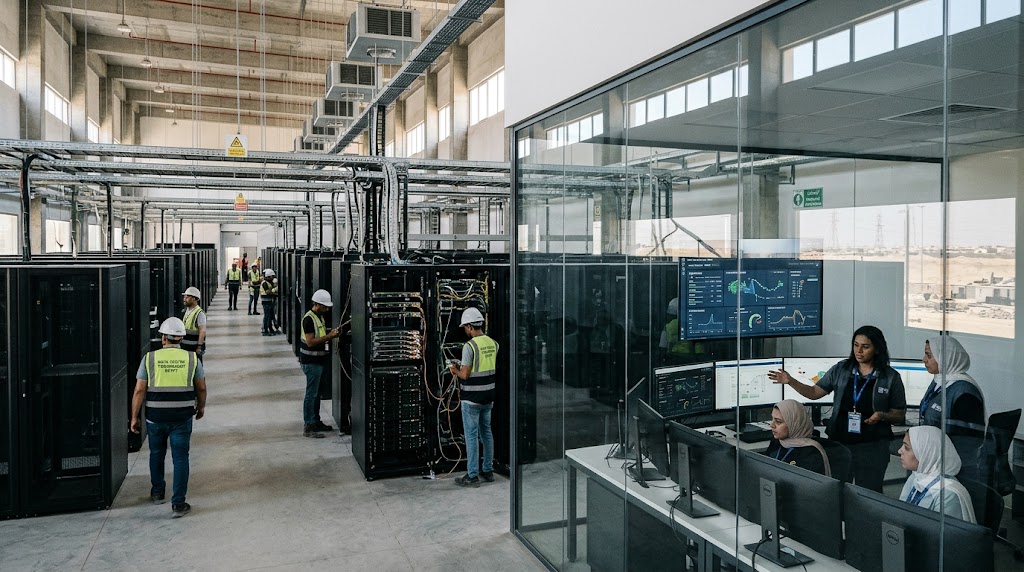
Egypt is preparing to expand its digital infrastructure with plans to establish five to seven mega data centres over the next four to five years, as the country seeks to attract technology investment and strengthen its position as a regional artificial intelligence hub.
The plan was outlined by Communications and Information Technology Minister Raafat Hendy during the Digital Egypt session at the Egypt 2026 Forum. Some facilities are expected to become operational and serve international markets by 2030, while construction continues on others.
The expansion is part of a wider technology strategy focused on artificial intelligence, cloud computing, digital services and advanced telecommunications infrastructure.
Egypt is also targeting $12 billion in annual digital exports by 2030, alongside plans to increase the information and communications technology sector’s contribution to gross domestic product to 8%. The government aims to create 200,000 jobs and support 250 startups developing AI applications.
Data centres are essential to modern digital economies because they provide the computing power and storage needed for AI systems, cloud platforms, online services and business applications. Expanding local capacity could help companies process data closer to their customers and attract international technology providers.
However, the scale of the proposed expansion will require substantial investment, reliable electricity, advanced cooling systems and skilled technical workers. These factors will influence how quickly the planned facilities can be developed and begin operating.
The initiative could create new opportunities for Egypt’s technology sector, including data-centre engineering, cybersecurity, cloud services and AI development. Its success will depend on turning the announced targets into operational facilities and sustainable technology jobs.

Comments (0)
Sign in to join the conversation.