

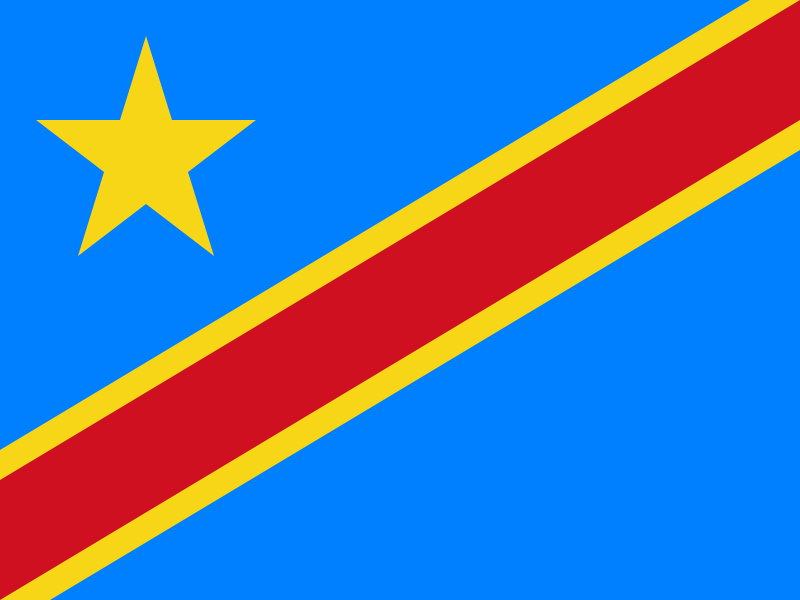












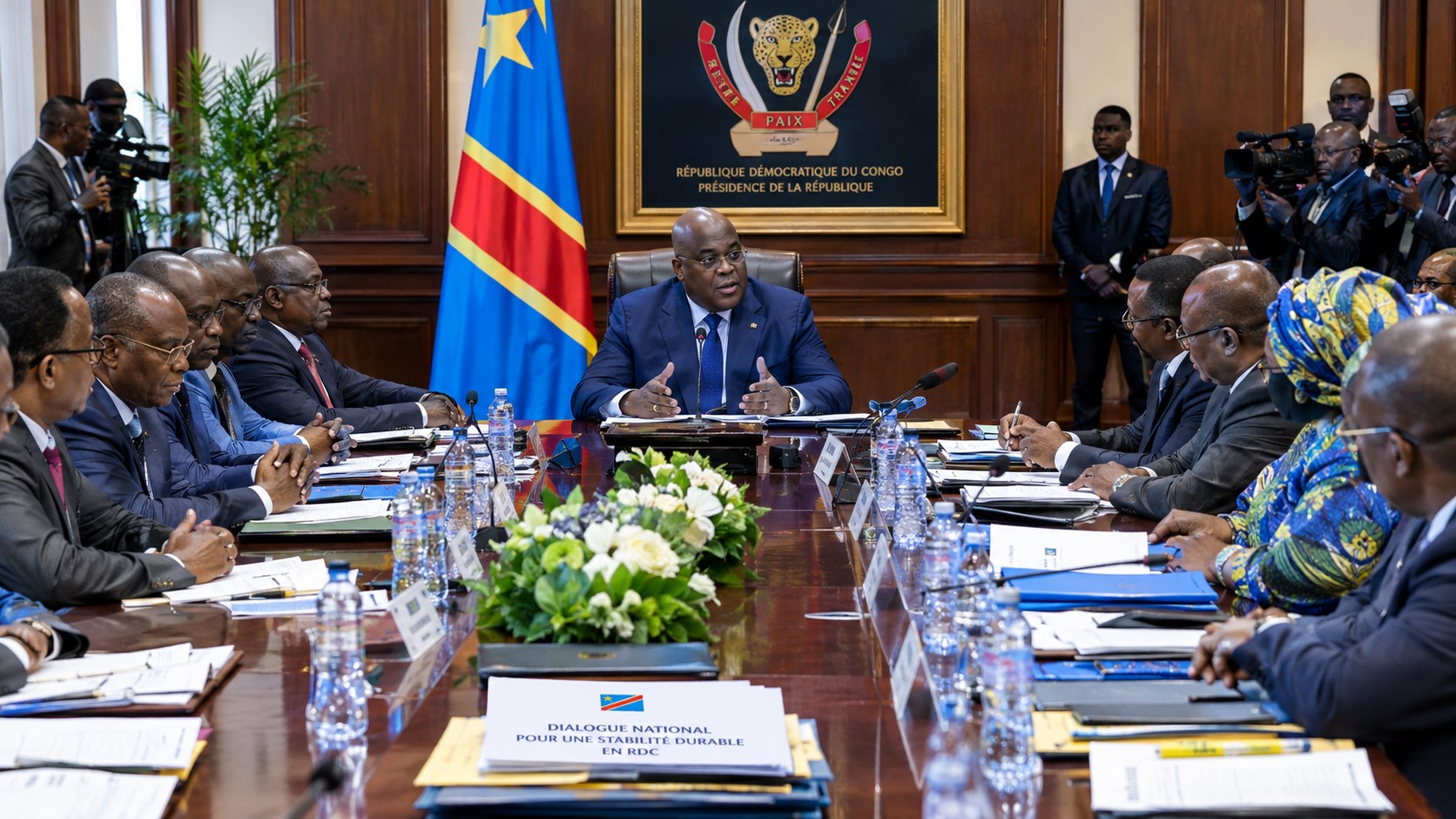
KINSHASA, Democratic Republic of the Congo — The political debate in the Democratic Republic of the Congo has intensified after major opposition groups rejected President Félix Tshisekedi’s proposal for a national dialogue.
The proposed talks were presented as a way to address political tensions and help build a broader consensus around the country’s future. However, opposition groups have questioned the proposed process and rejected Tshisekedi’s initiative.
The disagreement comes as the government faces continuing political and security challenges, particularly over the conflict in eastern DRC. The national dialogue proposal has therefore become an important test of whether the country’s political forces can find common ground.
Opposition figures argue that any meaningful dialogue should have broad participation and credible guarantees, while the government has promoted dialogue as a mechanism for reducing tensions and strengthening national cohesion.
The dispute also comes after President Tshisekedi recently sought to advance a wider political process aimed at addressing divisions inside the country. Analysts and civil-society actors are watching closely to see whether Kinshasa can bring competing political forces back to the negotiating table.
For ordinary Congolese, the outcome could have wider implications for political stability, governance and efforts to resolve the security crisis in the east.
The rejection of the dialogue proposal puts renewed pressure on President Tshisekedi to find a political formula capable of attracting broader opposition participation.


Comments (0)
Sign in to join the conversation.