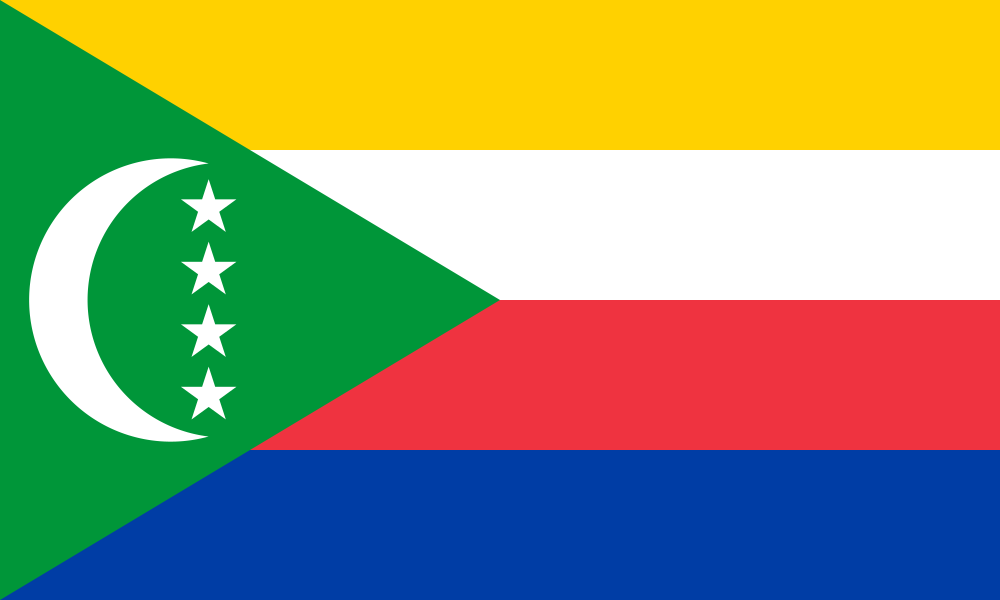











MORONI, Comoros — Political tensions in Comoros remain elevated as opposition figures in Mohéli continue to challenge President Azali Assoumani and demand respect for the country's rotating-presidency system.
Opposition leaders on the island have argued that the principle of presidential rotation between the three main islands remains central to the national reconciliation framework established in 2001. They have criticised what they describe as the concentration of political power in the current administration.
The dispute has gained renewed attention during 2026 as opposition groups seek to mobilise supporters and put pressure on the government over the interpretation of the country's political arrangements.
Assoumani remains president, while the next presidential election is currently expected in 2029.
The continuing disagreement could become an important issue in Comoros politics, particularly if opposition groups maintain pressure for greater adherence to the island-based power-sharing principle.
The political debate also comes as the government faces wider questions over democratic institutions, public administration and relations between the federal government and the individual islands.
For Comoros, the dispute highlights the continuing importance of the 2001 reconciliation framework and the balance of political power among Ngazidja, Mohéli and Anjouan.
Comments (0)
Sign in to join the conversation.