


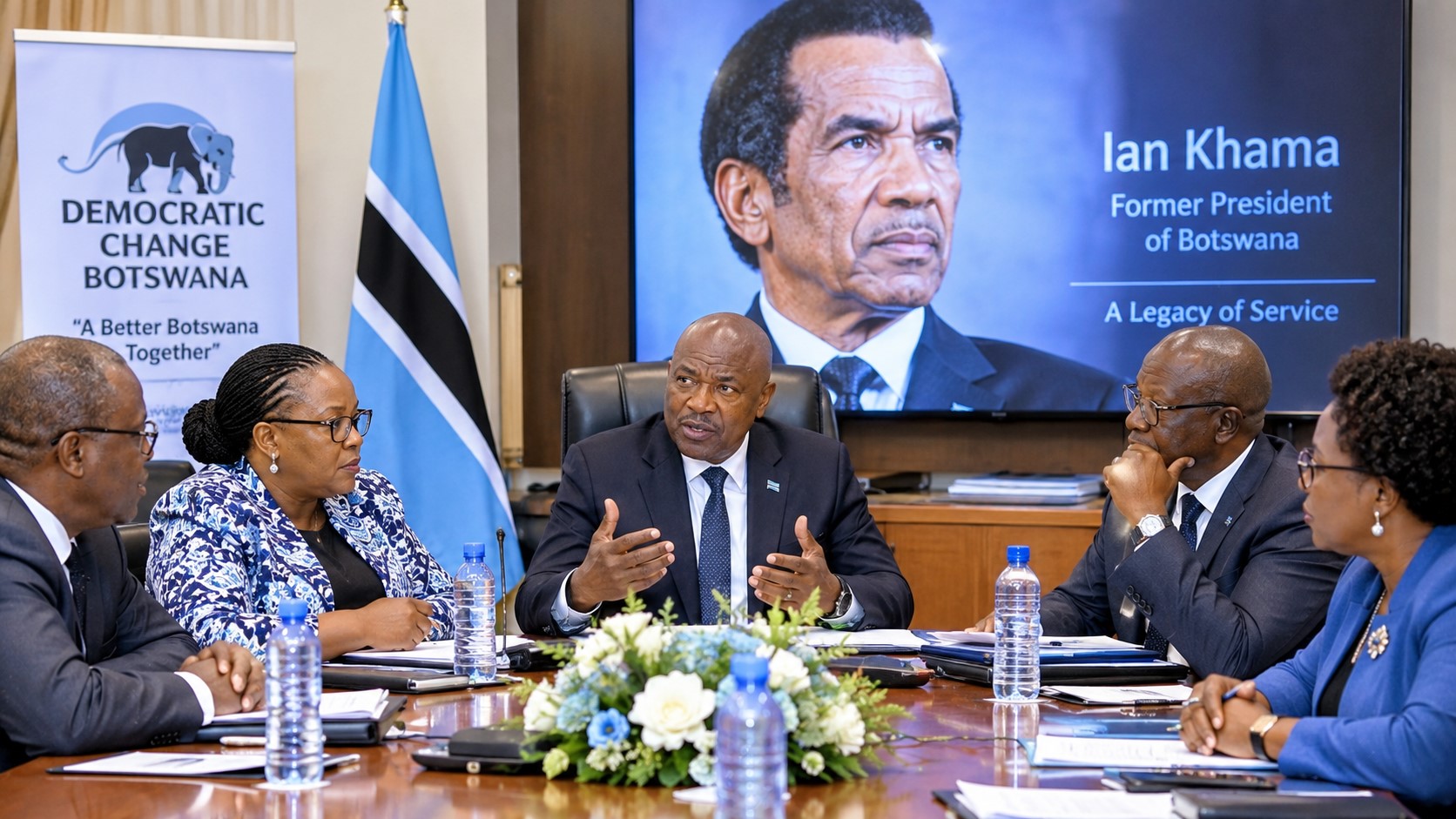
Botswana's political landscape is facing renewed debate over the future of the opposition following discussions about former President Ian Khama's possible return to active politics.
The issue comes as opposition parties continue assessing their position after the Umbrella for Democratic Change (UDC) secured power in the 2024 general election, ending the Botswana Democratic Party's decades-long hold on government.
The Botswana Democratic Party (BDP) has also been exploring greater cooperation with other opposition formations following disappointing results in recent by-elections. Its leadership has indicated that collaboration could strengthen democratic accountability and improve scrutiny of the government.
Khama's potential political involvement could become an important factor in future opposition discussions, particularly as parties consider leadership, alliances and strategies ahead of the 2029 general election.
However, a political return should not be treated as confirmed. The debate reflects wider questions about opposition unity, political influence and the direction of Botswana's multiparty system.
For the ruling UDC administration, a more coordinated opposition could mean stronger parliamentary scrutiny and increased pressure to demonstrate progress on its policy commitments.
As political discussions continue, Botswana's parties face the challenge of rebuilding public confidence while presenting clear alternatives to voters.
Comments (0)
Sign in to join the conversation.