


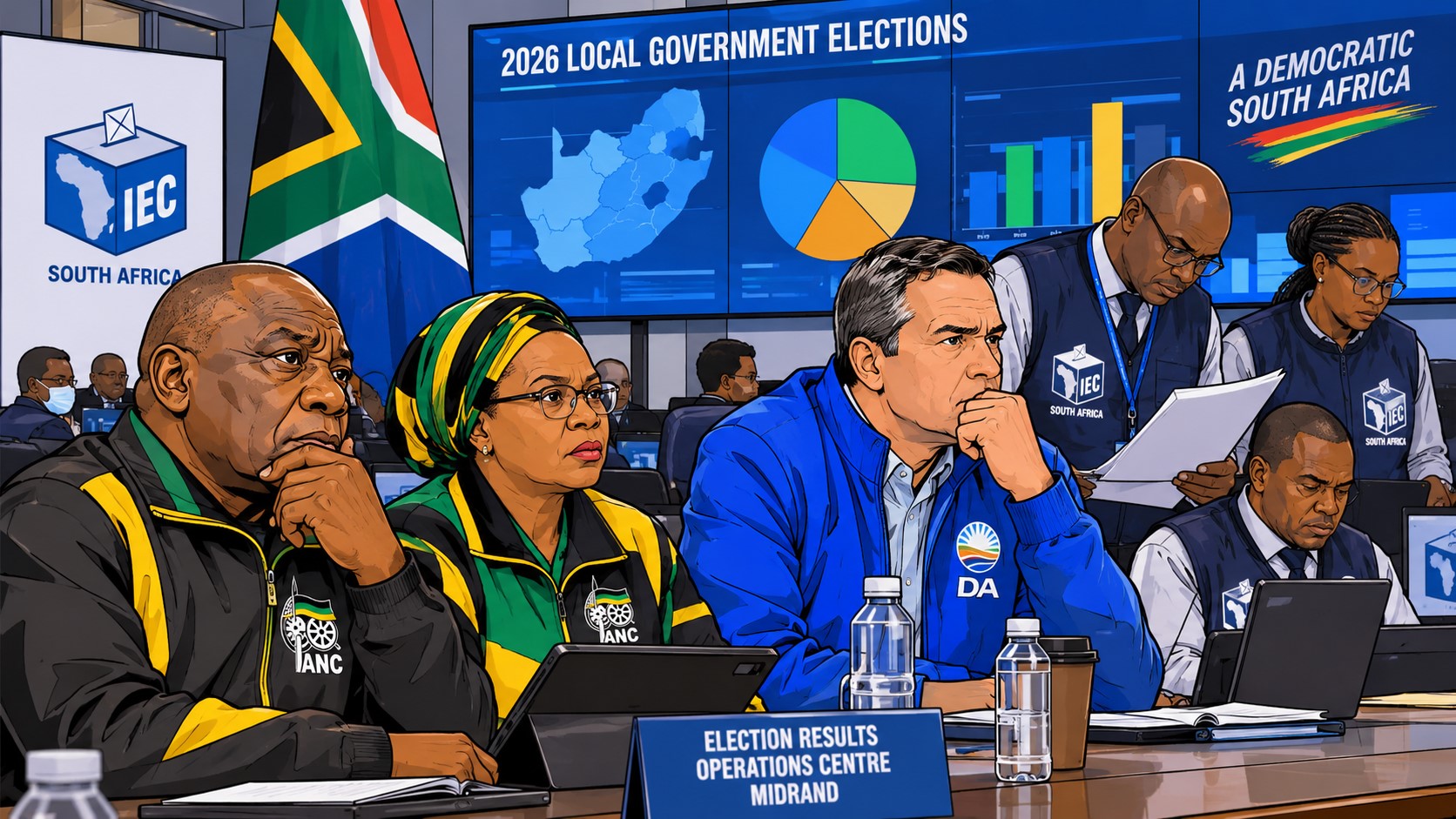
South Africa's political landscape could be heading for a major transformation after early results from the 2026 Local Government Elections showed the African National Congress (ANC) narrowly leading the Democratic Alliance (DA).
Preliminary figures released on Thursday indicate a highly competitive political contest, with the ANC receiving approximately 32% of the vote compared with around 31% for the DA, based on roughly 12% of votes counted.
The early figures highlight the growing pressure on the ANC, which has faced increasing public dissatisfaction over unemployment, corruption, crime and poor municipal service delivery.
The Democratic Alliance is seeking to strengthen its position, particularly in major urban centres, while smaller political parties, including the Economic Freedom Fighters and uMkhonto weSizwe, could play influential roles in determining the future of municipal governments.
Coalition negotiations are expected to become a major political challenge if no party secures an outright majority in key municipalities.
Johannesburg, Tshwane and other major urban centres could face complicated negotiations as parties compete to secure mayoral positions and control municipal councils.
The election outcome could also intensify internal discussions within the ANC about its political direction and leadership ahead of the party's next leadership transition.
Although the early figures are not final, the emerging results suggest that South Africa's traditional political balance is facing another significant test.
The coming days will be crucial as more votes are counted and political parties prepare for potentially difficult coalition negotiations that could reshape local government across South Africa.
Comments (0)
Sign in to join the conversation.