


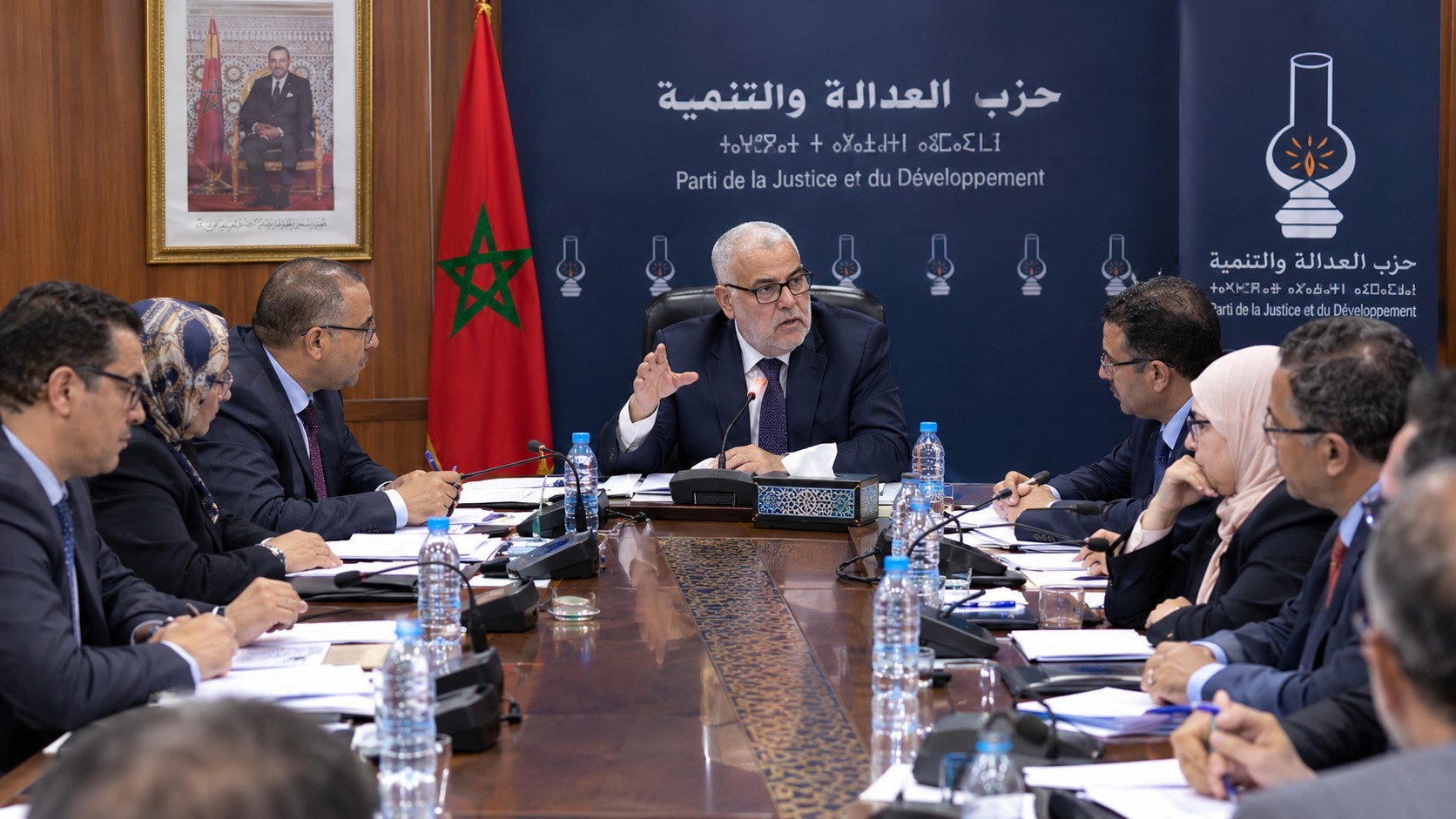
Morocco’s political debate has intensified after Justice and Development Party (PJD) leader Abdelilah Benkirane questioned the results of the September parliamentary election, raising fresh allegations about his party’s treatment by the election-winning Authenticity and Modernity Party (PAM).
Speaking to PJD lawmakers on October 26, Benkirane claimed his party had won more parliamentary seats than the official results showed. The PJD secured 54 seats in the 395-member House of Representatives, finishing fourth in the election held on September 23.
Benkirane accused PAM of seeking to marginalise the PJD, although his claims about the election results remain allegations and were not established as fact in the report. He also acknowledged that his party’s earlier electoral decline was partly linked to mistakes made by its own leadership.
The remarks come as Morocco’s new government, led by Fatima Ezzahra El Mansouri, begins its work following the formation of a four-party governing coalition. PAM won 97 seats, while the PJD has returned to parliament with a larger group than it held after its major defeat in 2021.
The latest exchange highlights continuing friction between Morocco’s governing majority and its Islamist-rooted opposition. The debate could shape parliamentary scrutiny of government policies, including public spending, living costs and economic reforms.
For Morocco’s political landscape, the key question is whether the renewed confrontation will lead to sustained policy debate in parliament or deepen divisions between the country’s major parties.
Comments (0)
Sign in to join the conversation.