









































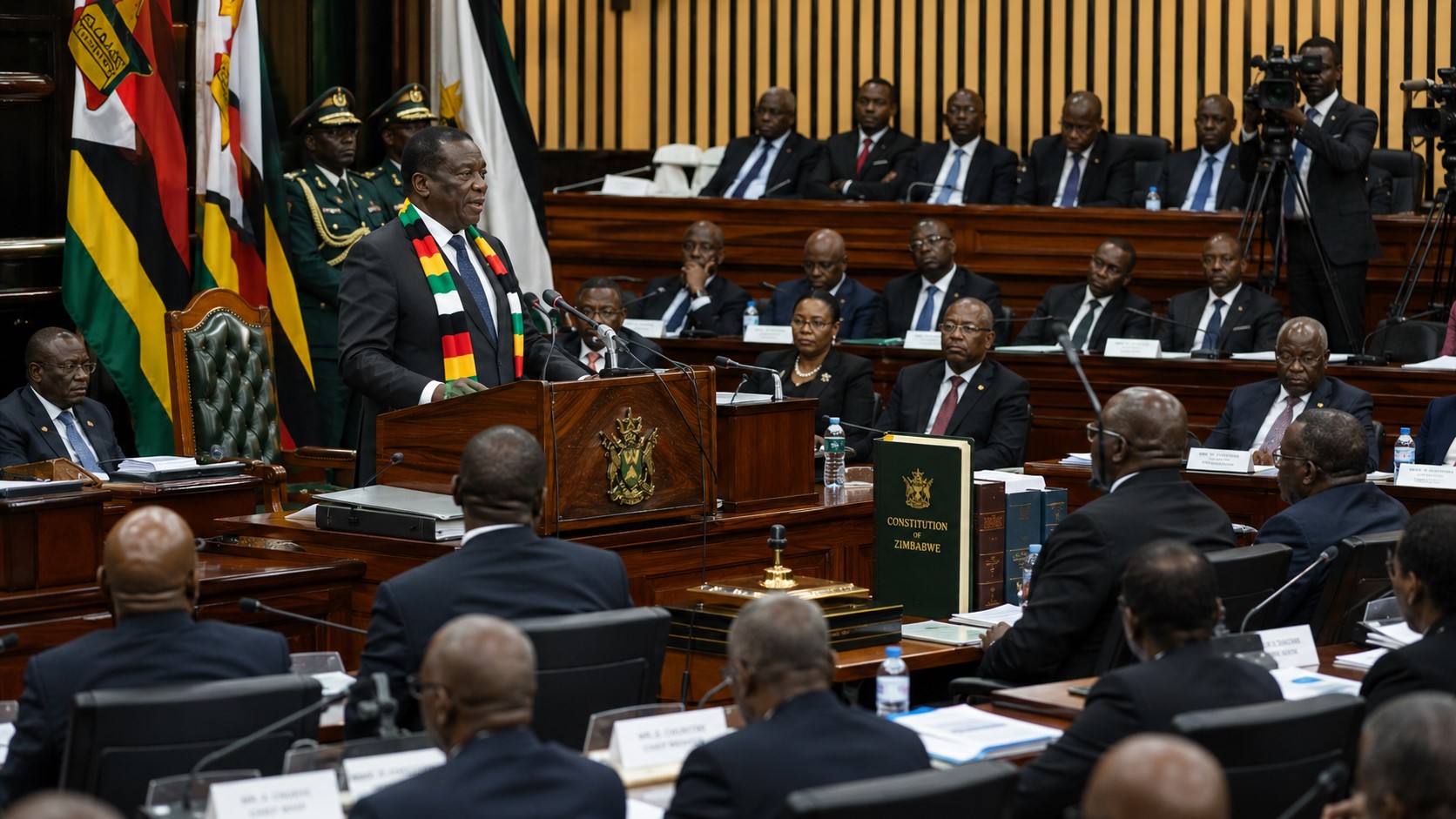
HARARE — Zimbabwe has entered a new phase of political debate after President Emmerson Mnangagwa signed constitutional amendments that delay the next presidential election, extend the presidential term, and change the way the president is elected.
The amendments abolish direct presidential elections and provide for the president to be elected by Parliament, while also extending the terms of the president and lawmakers. The changes have triggered strong debate among political actors and civil society groups over electoral accountability and the future of Zimbabwe’s democratic institutions.
Supporters of the reforms say the constitutional changes will strengthen institutional arrangements, while critics argue that they weaken direct voter participation and could extend the incumbent’s time in office.
The changes have also intensified political tensions, with opposition groups and civil society organizations questioning the reform process and raising concerns about the impact on future elections.
Political analysts say the new constitutional framework could have long-term implications for Zimbabwe’s electoral system, the balance between Parliament and the presidency, and the country’s political transition.
The constitutional changes now place Zimbabwe’s electoral future at the centre of national debate, with political parties, lawmakers, and citizens watching how the new system will operate.


Comments (0)
Sign in to join the conversation.