





















































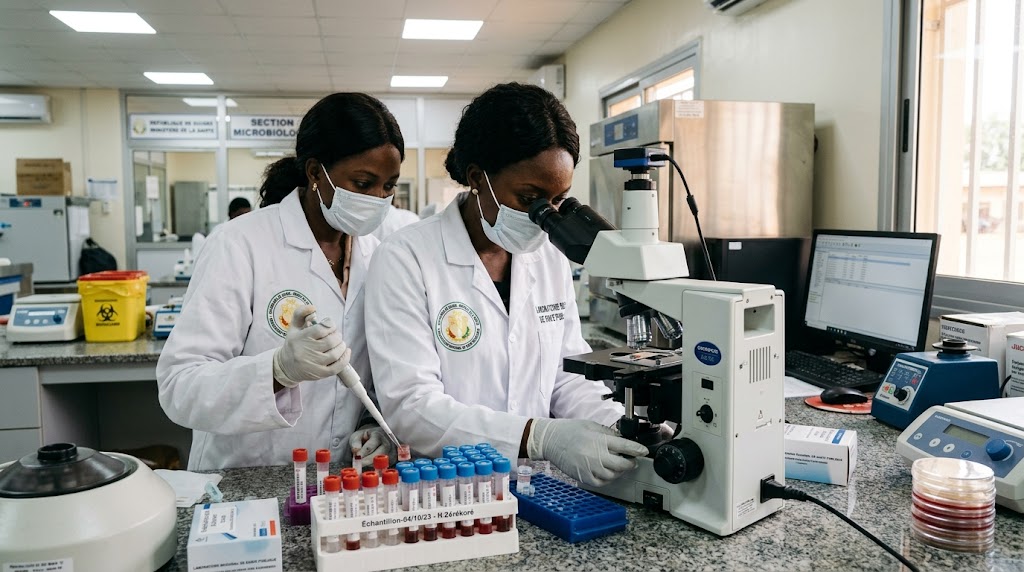
A new scientific study has highlighted the role of strengthened local laboratories in detecting Lassa fever and other viral haemorrhagic fevers in Guinea, with researchers reporting that decentralised testing helped improve outbreak surveillance in the country’s forested region.
The study, published in npj Viruses in September 2026, examined laboratory testing in Guéckédou and N’Zérékoré. Between 2017 and 2024, the two laboratories tested 4,683 samples from suspected viral haemorrhagic fever cases. Molecular testing identified 47 positive samples, including 30 confirmed Lassa fever cases.
Researchers said the locally based laboratory programme supported rapid detection and response during the 2021 Ebola resurgence and the emergence of Marburg virus disease. The study also noted that Lassa fever had previously been detected only sporadically in Guinea.
The findings underline the importance of diagnostic capacity outside major urban centres, particularly in regions where timely identification of infectious diseases can inform public health action. The authors said sustained laboratory capacity and trained staff remain important for preparedness and response.
Comments (0)
Sign in to join the conversation.