



















































Equatorial Guinea Accelerates Digital Transformation with World Bank Support
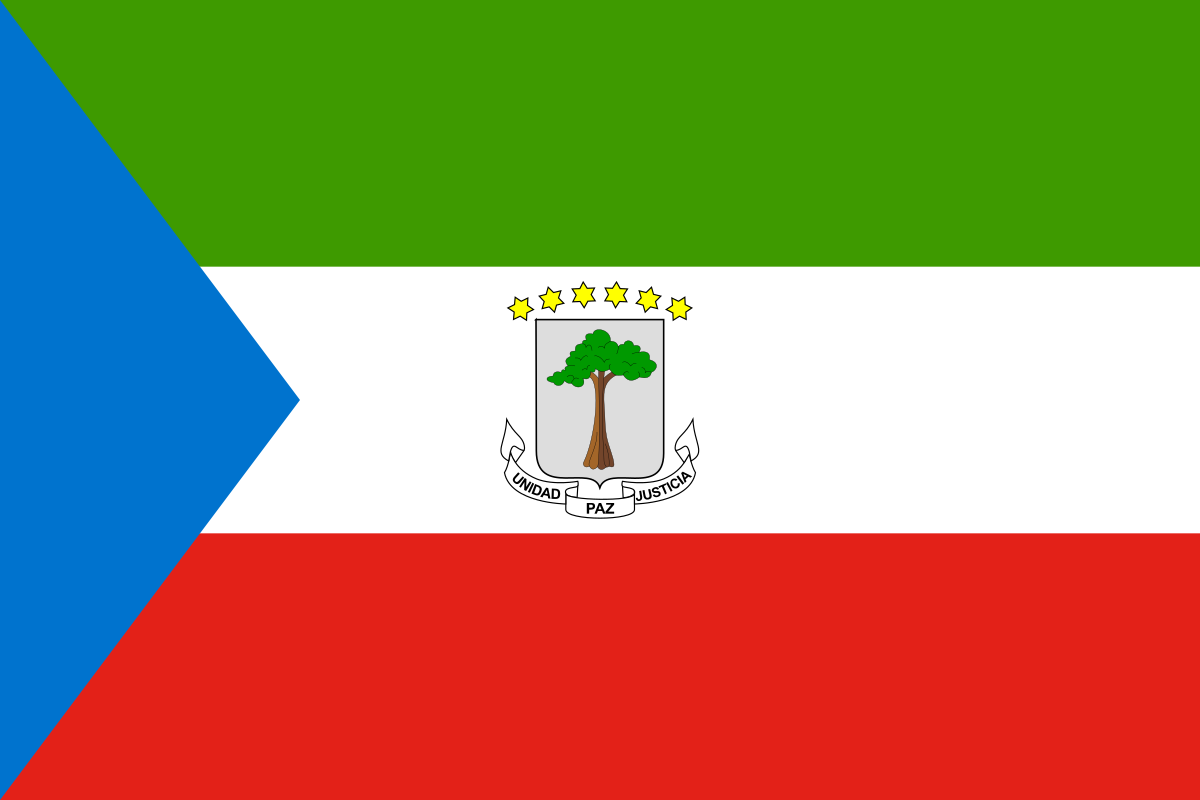
Equatorial Guinea's Ministry of Transport, Telecommunications, and Civil Aviation has kicked off a comprehensive, multi-day workshop in Malabo aimed at modernizing the country's telecommunications framework and driving its digital economy forward.
Held at the headquarters of the Bank of Central African States (BEAC), the opening session was led by Minister of State Honorato Evita Oma alongside World Bank Group Resident Representative Juan Diego Alonso. Key leaders from BEAC and the Deputy Attorney General of the Republic also attended, marking a unified commitment to economic modernization.
A Collaborative Ecosystem Approach
Over the course of the workshop, eight World Bank specialists across cybersecurity, digital law, and project finance are collaborating with multi-sectoral technical teams. Participants include representatives from:
- Ministerial departments and financial institutions
- Independent legal and technical professionals
- Universities and academic research institutions
- Sector entities, including ORTEL, GITGE, and CNIAPGE
This cross-industry representation ensures that legal, economic, and technical perspectives align to build a resilient digital ecosystem.
Core Workshop Objectives
The initiative focuses on three main strategic milestones:
- Finalizing the National Digital Economy Strategy: Establishing a cohesive roadmap for national digital expansion.
- Modernizing the Legal & Regulatory Framework: Developing rules tailored to data protection, cybersecurity, and artificial intelligence without copying mismatched foreign models.
- Securing Historic World Bank Financing: Preparing a project that, if approved, would mark the World Bank Group’s first direct financing operation in Equatorial Guinea in 35 years.
Driving Investment and Empowering Local Talent
By establishing a stable, transparent regulatory landscape, Equatorial Guinea aims to reduce market entry barriers and attract domestic and international investment. Key legislative elements—such as the upcoming Digital Services Law—will enable digital platforms and social networks to legally compensate local content creators, software developers, gamers, and influencers.
Additionally, the government plans to launch a dedicated telecommunications business incubator and accelerator. Partnering with institutions like TEG Campus, INSTTIC, the National University of Equatorial Guinea, and the Afro-American University of Central Africa, the incubator aims to foster youth entrepreneurship and directly generate approximately 1,000 skilled digital jobs.
Ultimately, the workshop aims to deliver a consensus-driven roadmap that positions Equatorial Guinea as a secure, predictable, and competitive tech hub in Central Africa.



Comments (0)
Sign in to join the conversation.