










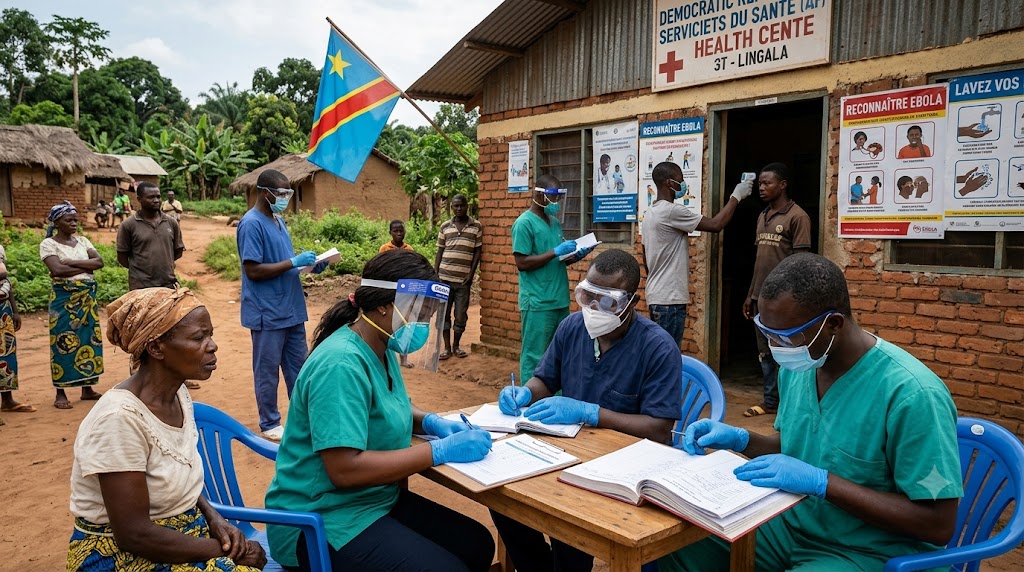
KINSHASA, Democratic Republic of the Congo — The Democratic Republic of the Congo is expanding its Ebola response after health authorities confirmed the disease has reached South Ubangi province, marking a significant new development in the country’s ongoing health emergency.
The newly affected province is in northwestern DRC, far from the outbreak’s original epicentre in Ituri. Health authorities confirmed that a 23-year-old man who later died tested positive for the Bundibugyo species of Ebola after travelling from South Kivu and eventually reaching South Ubangi.
Authorities have begun contact tracing to identify people who may have been exposed to the confirmed case and prevent further transmission.
The latest development brings the outbreak to seven provinces, with government figures showing 7,022 confirmed cases and 3,398 deaths as of September 11.
The geographical expansion is creating additional pressure on an already stretched healthcare system. WHO has warned that shortages of trained health workers, operational partners and funding are slowing efforts to expand treatment and response capacity.
Health authorities are using a more decentralised strategy, establishing treatment facilities closer to newly affected communities while strengthening surveillance, vaccination and community-based response measures.
The spread into South Ubangi is particularly significant because the province borders Congo-Brazzaville and the Central African Republic, increasing the importance of cross-border surveillance and coordination.
The latest case highlights the urgent need for rapid contact tracing, stronger health services and sustained international support to prevent Ebola from spreading further across the DRC and neighbouring countries.


Comments (0)
Sign in to join the conversation.