

















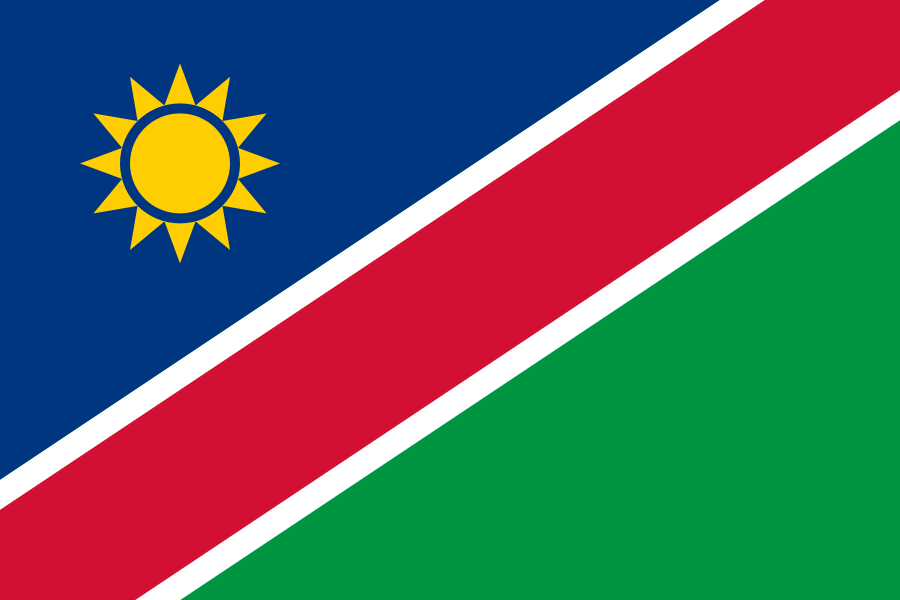










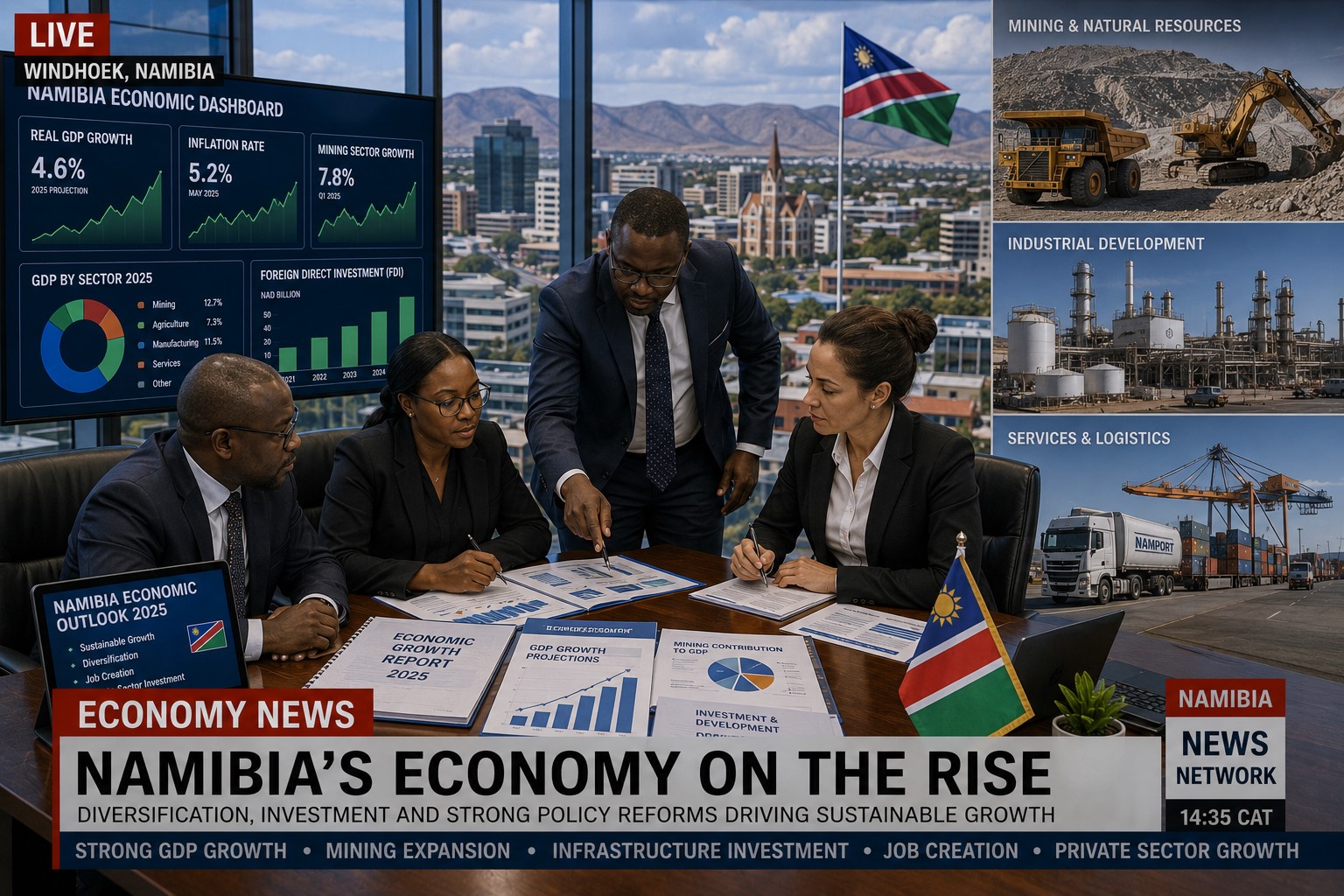
WINDHOEK — Namibia’s economy reached an estimated N$70.9 billion in the first quarter of 2026, although real economic growth slowed as a sharp decline in mining activity weighed on overall performance.
The latest economic data shows that real GDP growth eased to 2.0%, compared with 2.8% during the same period a year earlier. The mining sector recorded a significant decline, creating pressure on one of Namibia’s traditional economic pillars.
The services sector emerged as a major driver of economic activity, recording strong growth and helping offset weakness in mining. The performance highlights the growing importance of finance, transport, trade, tourism, communications, and other service industries to Namibia’s economic outlook.
Economic analysts say the latest figures reinforce the need for greater diversification as Namibia seeks to reduce its dependence on traditional commodity sectors.
The country is also looking to future opportunities in oil, gas, green hydrogen, uranium, renewable energy, and other emerging industries to support investment and long-term growth. The IMF projects Namibia’s real GDP growth at 2.1% for 2026, while warning that weak diamond demand and elevated fuel costs remain economic headwinds.
Namibia’s latest economic performance highlights both the resilience of its services sector and the urgent need to build a more diversified, investment-driven economy.


Comments (0)
Sign in to join the conversation.