












































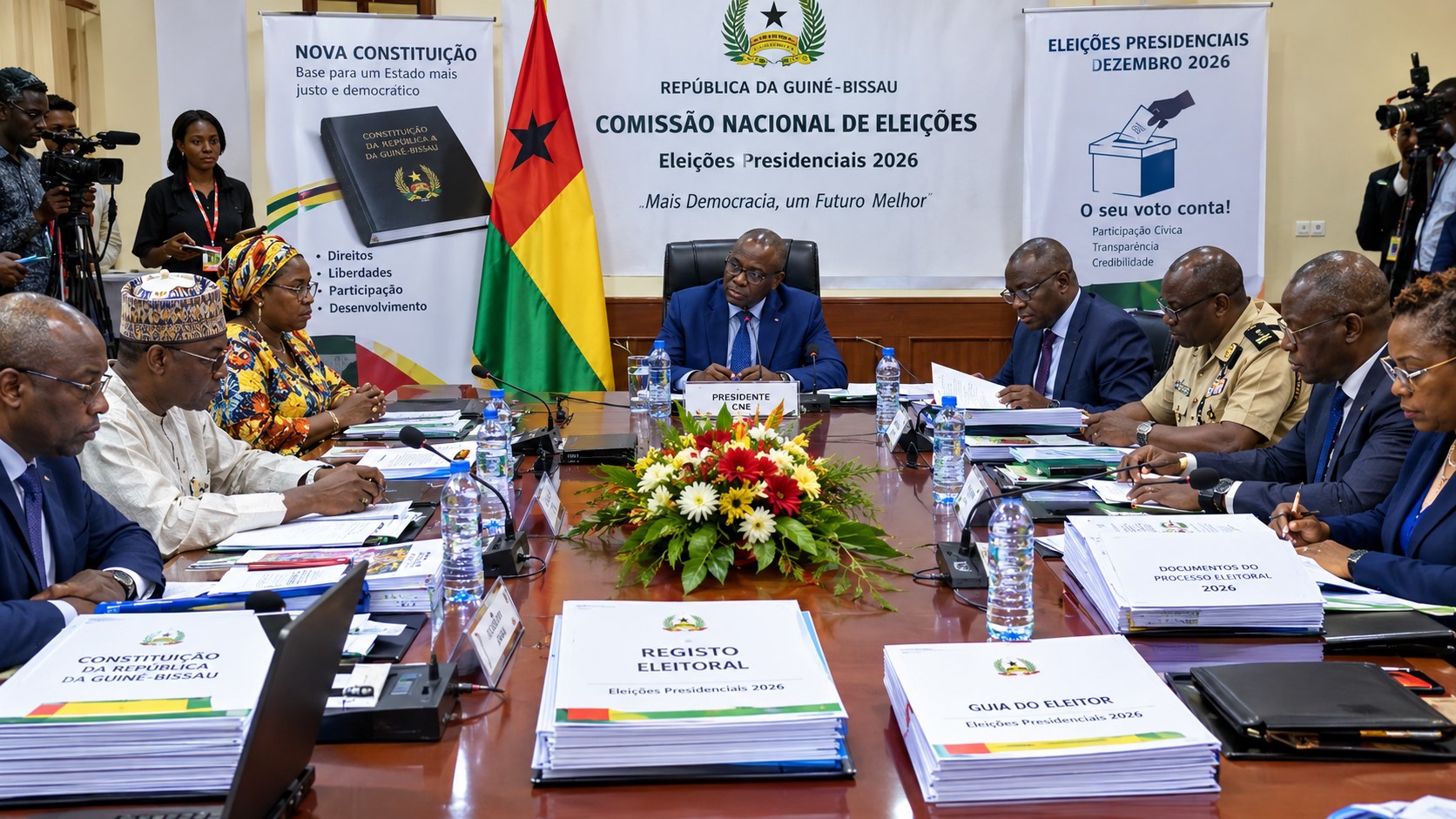
BISSAU, Guinea-Bissau — Guinea-Bissau’s upcoming presidential election is facing a new political question after constitutional changes approved in August introduced a five-year continuous residency requirement for presidential candidates.
The requirement forms part of the constitutional changes approved through the August referendum, which also expanded presidential powers and altered the country’s political system.
Under the new framework, presidential candidates must have lived continuously in Guinea-Bissau for the preceding five years. The rule has attracted particular attention because several political figures have spent periods outside the country during the military-led transition.
The issue comes as Guinea-Bissau prepares for presidential and legislative elections scheduled for December 6, 2026, which are intended to mark a return to civilian government following the November 2025 military takeover.
Political parties and potential candidates are therefore expected to pay close attention to the new eligibility rules as the electoral process moves forward.
The constitutional changes also reduce the role of parliament while giving greater authority to the presidency, marking a significant change from Guinea-Bissau’s previous semi-presidential arrangement.
With the December election approaching, candidate eligibility and implementation of the new constitutional rules are becoming central issues in Guinea-Bissau’s political transition.
Comments (0)
Sign in to join the conversation.