




























Burundi is stepping up health surveillance at its borders as authorities work to improve early detection and response to infectious disease threats moving across the region.
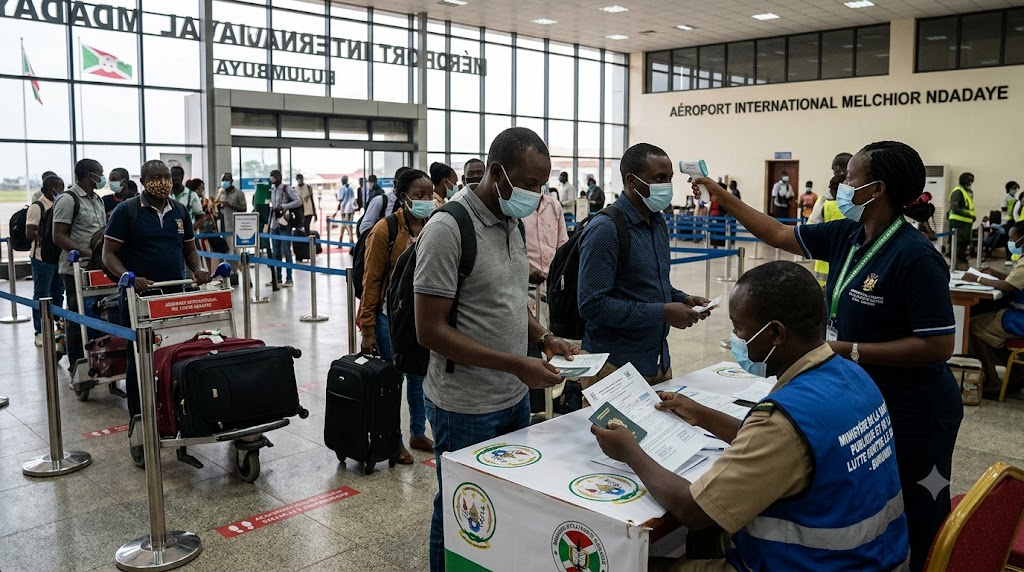
The Ministry of Public Health has highlighted strengthened surveillance measures at Melchior Ndadaye International Airport, as part of efforts to detect potential health threats and protect the country’s population.
The move comes as Burundi continues to manage several public-health pressures, including measles transmission. WHO reported that around 1,480 suspected measles cases had been recorded by the end of June 2026, with active transmission continuing in several health districts.
Stronger border monitoring could help Burundi identify suspected infections earlier, allowing health authorities to investigate cases and coordinate a faster response before diseases spread more widely.
The country’s location next to the Democratic Republic of Congo and other East African states makes cross-border disease surveillance an important part of Burundi’s wider public-health strategy.
Comments (0)
Sign in to join the conversation.