


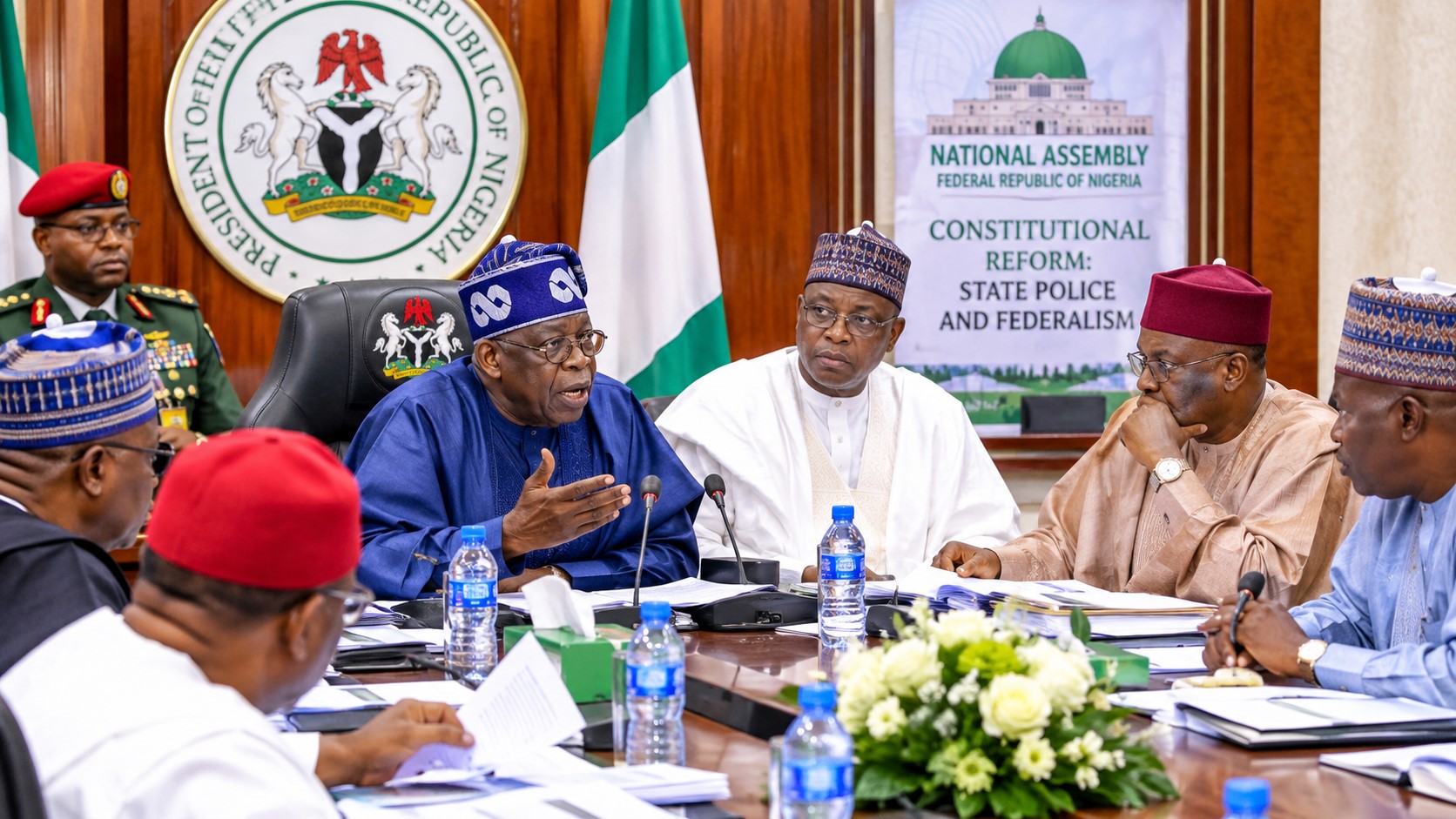
Nigeria has taken a major step towards transforming its policing system after the National Assembly transmitted a proposed constitutional amendment establishing state police services to President Bola Ahmed Tinubu for assent.
The development followed approval from at least 28 State Houses of Assembly, exceeding the constitutional requirement of 24 out of the country's 36 state legislatures.
The proposed reform seeks to allow individual states to establish and manage their own police services alongside the existing Nigeria Police Force.
Deputy Speaker of the House of Representatives, Benjamin Kalu, described the legislative development as an important milestone in efforts to strengthen security and improve policing across the country.
Supporters of the proposal believe decentralised policing could improve intelligence gathering, strengthen community security and enable faster responses to kidnapping, banditry and other criminal activities.
However, the proposed reform has also raised questions about funding, operational independence, human rights protections and the possibility of political interference by state governors.
The constitutional amendment represents an important development in Nigeria's federal governance structure. Its implementation will depend on the completion of the constitutional process and the necessary legal framework for operating state police services.
For millions of Nigerians, the central question is whether state-controlled policing will deliver safer communities and stronger public accountability.



Comments (0)
Sign in to join the conversation.