


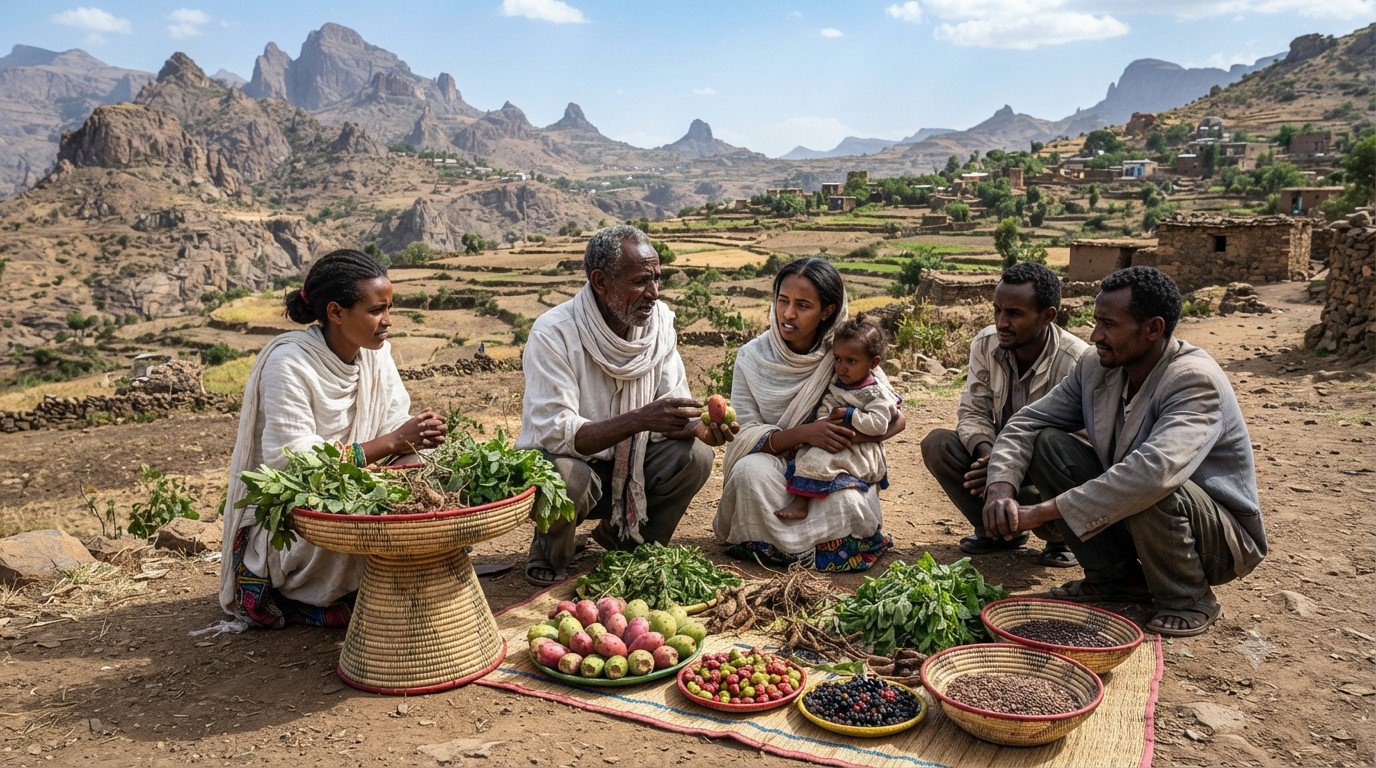
New Research Highlights Ethiopia's Hidden Food Resources
A newly published scientific study has documented 53 wild and semi-wild edible plant species in Hawzien District, northern Ethiopia, highlighting the importance of local biodiversity in supporting food availability and traditional livelihoods.
The research, published on November 21, 2026, in the Journal of Ethnobiology and Ethnomedicine, examined how communities use naturally growing plants for food, nutrition, seasonal shortages and commercial activities.
Researchers interviewed 120 local residents and conducted field observations, discussions and market assessments to document plant diversity and traditional knowledge.
Wild Plants Support Food Security
The study identified several widely recognized edible species, including prickly pear, Cordia africana and Ziziphus spina-christi.
Researchers found that some plants are regularly consumed, while others become particularly important during periods of food scarcity.
According to the findings, 11.3% of documented plant species were used specifically during food-shortage periods, demonstrating the potential role of wild food resources as emergency nutritional support.
Traditional Knowledge Could Be at Risk
The research also found significant differences in traditional plant knowledge among age groups and educational backgrounds, with older community members generally reporting knowledge of more edible species.
Researchers emphasized that documenting traditional ecological knowledge is important for preserving cultural heritage and ensuring that useful information about local food resources is passed to younger generations.



Comments (0)
Sign in to join the conversation.