




















































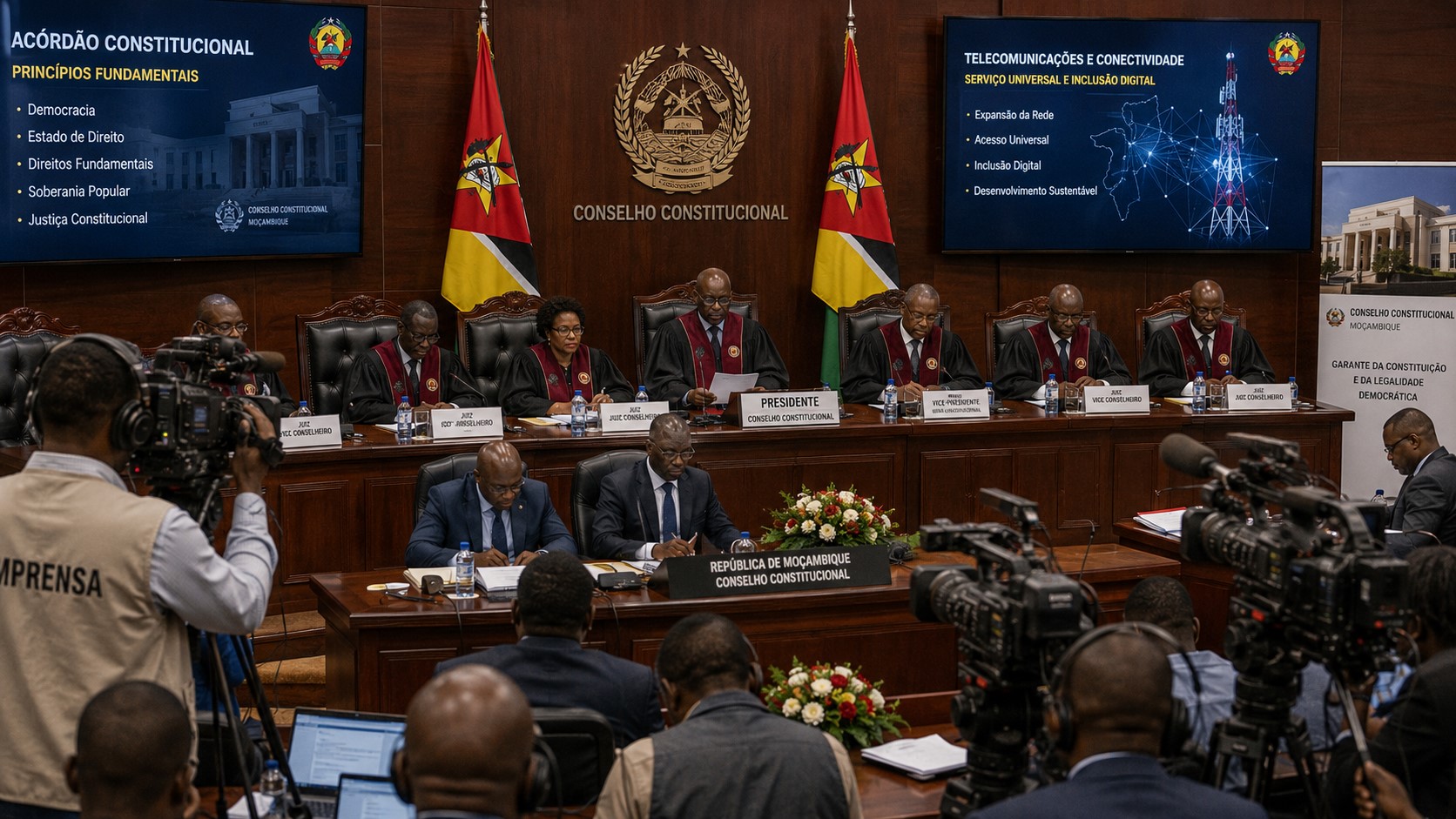
MAPUTO — Mozambique has entered a fresh political debate following a Constitutional Council decision to invalidate key provisions of the country’s telecommunications traffic-control regulations.
The ruling, issued after a challenge by the Ombudsman, found that the government had exceeded its regulatory authority by introducing restrictions affecting fundamental rights without legislation approved by Parliament.
The decision has placed executive authority and parliamentary oversight at the centre of Mozambique’s political discussion. The contested rules gave the communications regulator powers to intervene in telecommunications traffic, including circumstances involving restrictions on communications.
The Constitutional Council highlighted concerns involving freedom of expression, access to information, privacy and confidentiality of communications, making the ruling significant beyond the telecommunications sector.
The government has indicated that it respects the Constitutional Council’s decision, while the ruling could prompt further discussions over how future telecommunications and digital-security measures should be introduced.
Political observers say the case could strengthen demands for clearer legislative oversight when government policies affect constitutional rights.
The ruling is likely to become an important reference point in Mozambique’s continuing debate over executive power, institutional checks and digital freedoms.
Comments (0)
Sign in to join the conversation.