


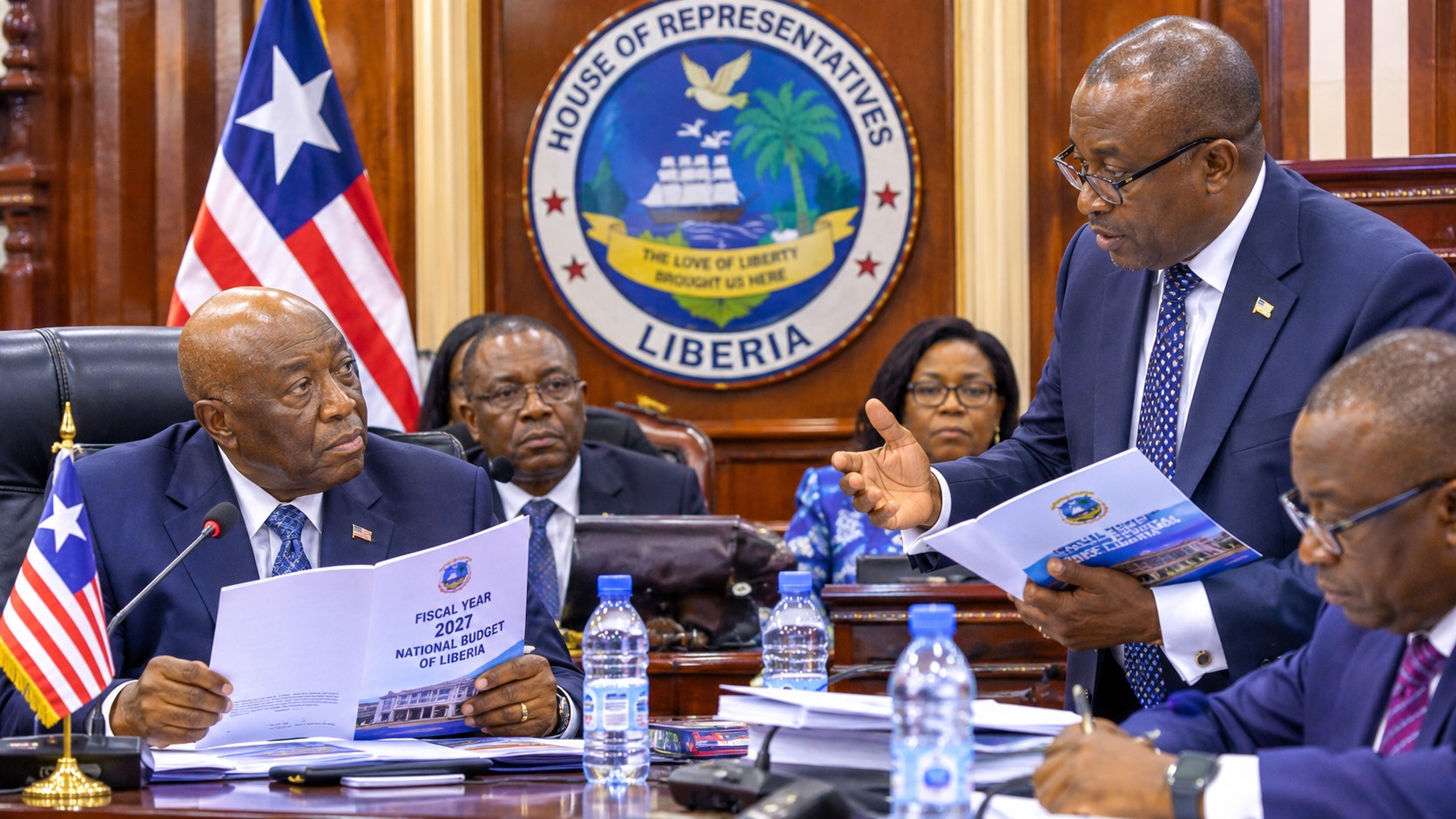
Liberia's government has taken an important political and economic step with the submission of its proposed 2027 national budget to the House of Representatives, setting out priorities for public services, infrastructure development and employment.
Finance Minister Augustine Kpehe Ngafuan explained that the proposed spending plan is designed to address longstanding salary inequalities while improving government services and supporting national development.
One of the major proposals is compensation improvements expected to benefit more than 17,000 public-sector workers through salary adjustments and recruitment. The plan includes provisions for teachers, healthcare workers, police officers and other civil servants.
Infrastructure is another major priority. The proposed budget allocates US$142.56 million to infrastructure and basic services, including road development and related projects. An additional US$40 million is proposed for electricity generation and distribution improvements.
The government has also proposed increased funding for transparency and accountability institutions, alongside additional support for social protection, agriculture and youth development.
However, the proposed budget also faces financial pressures. Government debt-servicing obligations are projected to increase to approximately US$275.5 million in 2027, compared with around US$232 million in 2026.
The draft now enters the legislative process, where lawmakers will examine its allocations and proposed policies before deciding on approval.
The 2027 budget debate is expected to become an important political discussion in Liberia, particularly regarding public spending, employment, infrastructure and accountability.
Comments (0)
Sign in to join the conversation.